
Published
A former furniture works gets confused with a wood treating site regularly, and they are different problems with different chemistry. Treating means creosote and preservatives driven into the wood. Finishing means coatings applied to the surface of it, which is a solvent question, and solvent questions travel further and produce a distinctive category of recorded restriction. The treating side is covered in former wood treating site due diligence.
What a finishing plant leaves
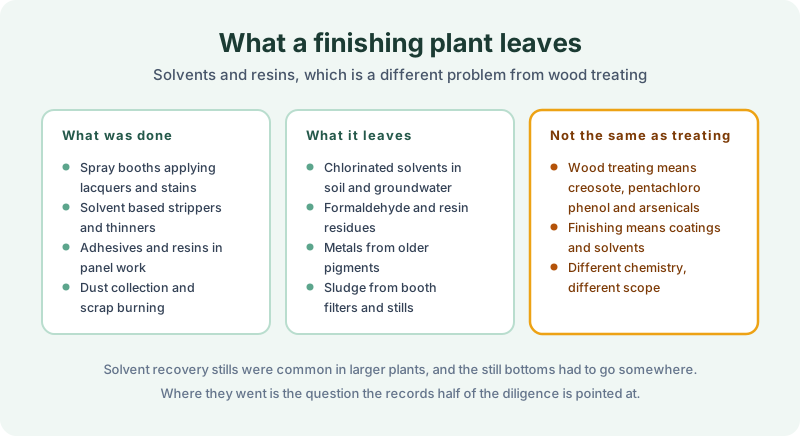
The operations are straightforward. Spray booths applying lacquers, stains and sealers. Solvent based strippers and thinners in quantity, both in finishing and in repair work. Adhesives and resins in panel and laminate production. Dust collection throughout, and on older sites scrap burning on the property.
The residues follow. Chlorinated solvents in soil and groundwater are the signature finding, since degreasing and thinning used them heavily through the relevant decades. Formaldehyde and resin residues from adhesives. Metals from older pigments in stains and paints. And sludge from booth filters and from solvent recovery stills, which larger plants operated to reclaim thinner.
Still bottoms are worth naming specifically. A plant recovering its own solvent generated a concentrated waste that had to go somewhere, and on sites of this age it frequently went into the ground on the property. Where it went is the question the records work is pointed at.
The industry is also unusually concentrated geographically, and in the furniture towns of the Carolinas, Virginia and the upper Midwest a single parcel may have housed three successive companies doing broadly the same work. That matters for scoping, because the operator whose practice created the problem may not be the operator anybody remembers.
What reaches the land record
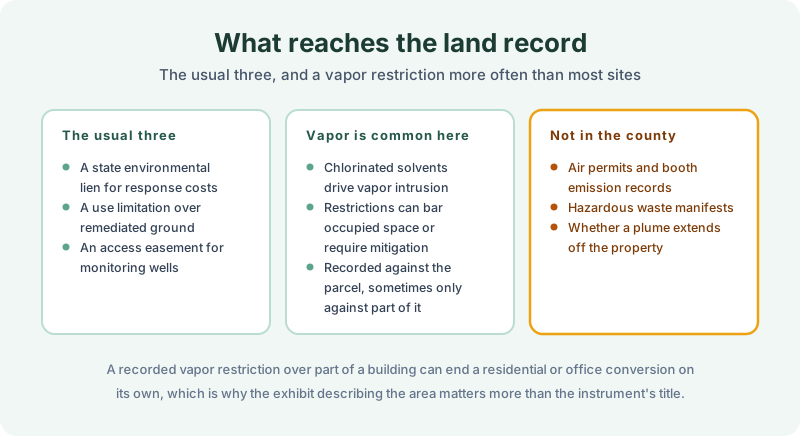
The three usual instruments. A state environmental lien for recovered response costs. An activity and use limitation over remediated ground. An access easement for monitoring.
What distinguishes this category is how often the restriction is a vapor one. Chlorinated solvents in groundwater drive vapor intrusion, and the resulting limitation can bar occupied space over part of a footprint, require a mitigation system, or condition any change of use. It is recorded against the parcel, sometimes against only part of it, and the exhibit describing the area matters considerably more than the title of the instrument. That mechanism is set out in vapor intrusion and recorded use restrictions.
Worth separating out is the dust question. Wood dust collection systems were a fire and explosion hazard rather than a contamination one, and the recorded consequences, where there are any, tend to be insurance and building matters rather than environmental instruments. It is a real site risk and not usually a land record risk.
What stays with the agencies is the operating record. Air permits and booth emission history, hazardous waste manifests, and whether a plume has been shown to extend beyond the property line.
Scoping the records work
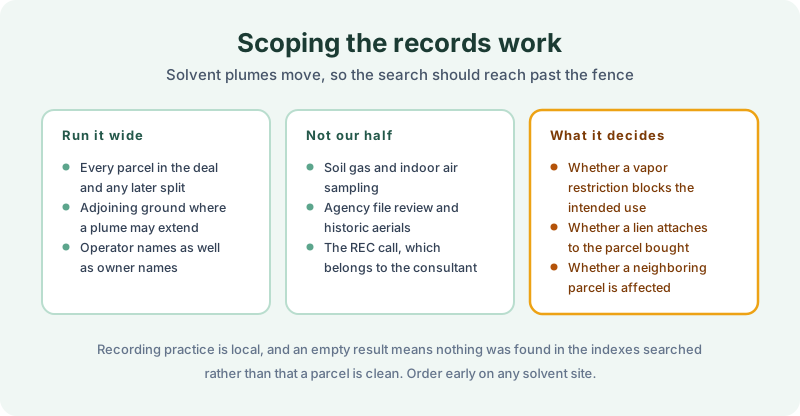
Run it wider than the fence, because solvent plumes move. Every parcel in the deal and any later split, adjoining ground where a plume may extend, and operator names as well as owner names, since these plants were commonly leased and the operator may be the party a restriction names.
Land title and judicial records from 1980 forward with the instruments attached in full. An index line reporting a use limitation is not the limitation, and on a vapor restriction the whole question is which area is covered and what activity is barred. Where a building has been subdivided or a parcel split since the restriction was recorded, working out which of today’s parcels carry it is its own exercise and it is where errors concentrate.
Run it alongside the environmental professional rather than in place of them. Soil gas and indoor air sampling, agency file review and historic aerial work are theirs, and the REC call belongs to the consultant. The buyer’s own user responsibilities remain their own.
Order early. A recorded vapor restriction can end a residential or office conversion on its own, and finding it in week one is worth a great deal more than finding it in week six. Recording practice is local, and an empty result means nothing was found in the indexes searched over the period searched.
The 1980 Environmental Lien & AUL report is where that records work gets done. Certified title abstractors review land title and judicial records from 1980 to the present and document every environmental lien, encumbrance, and AUL found, with the recorded instruments attached. It’s $425, delivered by email in 3–5 business days. Order online, or read how to read an environmental lien and AUL report first.
Get an E1527-21 compliant lien & AUL report
Our 1980 Environmental Lien & AUL reports are researched by certified title abstractors, cover judicial records, and are guaranteed accurate. Delivered in 3–5 business days.
or call 877-848-5337