Published
A closed pharmaceutical plant reads as clean industry to most people, which is the same instinct that gets food processing sites underestimated. The product was medicine, the buildings are modern, and the yard is tidy. The chemistry was never in the product. It was in the solvent used to make it, in the residues left after recovery, and in whatever was burned or lagooned at the back of the site.
What a pharmaceutical plant leaves
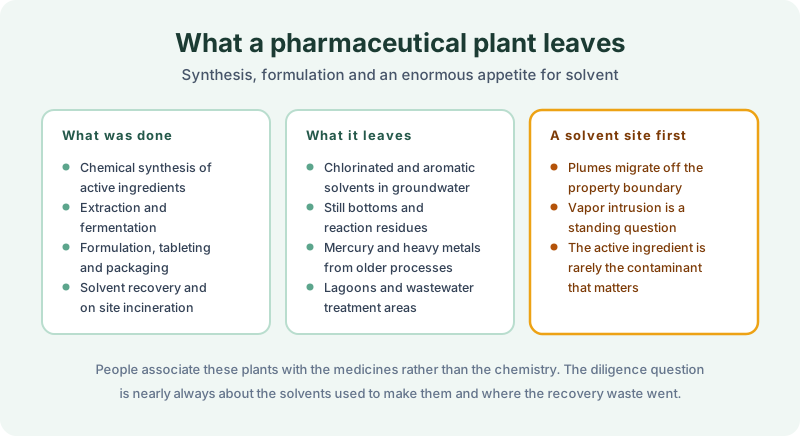
Four operations account for it. Chemical synthesis of active ingredients, which is multi step organic chemistry at industrial scale. Extraction and fermentation, which brings large volumes of solvent into contact with biological material. Formulation, tableting and packaging, which is comparatively benign. And solvent recovery, frequently with on site incineration of what could not be recovered.
The residues follow directly. Chlorinated and aromatic solvents in soil and groundwater are the defining finding. Still bottoms and reaction residues, which are concentrated and were disposed of in whatever way was normal at the time. Mercury and heavy metals from older catalytic processes. And lagoons or wastewater treatment areas, which on a large site are substantial.
Two features of the industry shape the diligence. These plants were built in campuses rather than single buildings, with synthesis in one area, formulation in another and utilities somewhere else again, so the risk is not evenly distributed across the parcel. And many operated for fifty years or more, which means the practice that created the problem may predate the practice anybody remembers.
Treat these as solvent sites first. Plumes migrate, vapor intrusion is a standing question rather than an unusual one, and the active ingredient the plant was famous for is rarely the contaminant that decides anything.
What reaches the land record
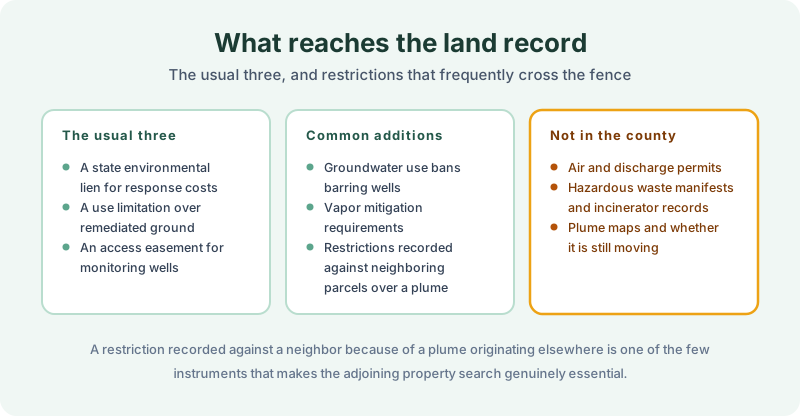
The three familiar instruments. A state environmental lien where public money has been spent recovering response costs. An activity and use limitation over remediated ground. An access easement for monitoring wells.
These sites commonly add more. Groundwater use restrictions barring wells, which reach further than people expect. Vapor mitigation requirements attaching to any occupied structure, described in vapor intrusion and recorded use restrictions. And, distinctively, restrictions recorded against neighboring parcels because a plume originating at the plant now sits under them.
That last category is one of the few things that makes an adjoining property search genuinely essential rather than merely prudent. A buyer of the parcel next door can inherit a recorded restriction without ever having owned anything industrial.
Worth noting is that a site may have gone through a state voluntary cleanup program rather than a federal one, and those programs generate their own recorded instruments with their own wording. What gets filed and how it is captioned varies by state, which is the point made in voluntary cleanup programs and what gets recorded.
What stays with the agencies is the operating record. Air and discharge permits, hazardous waste manifests and incinerator records, and plume maps showing whether the groundwater problem is stable or still moving.
Scoping the records work
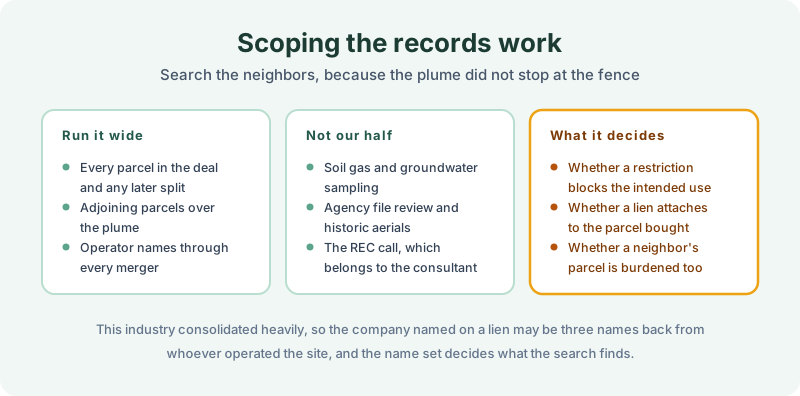
Run every parcel in the deal and any created by a later split, plus adjoining parcels over the plume, because that is where the restrictions are. Run operator names through every merger, since this industry consolidated heavily and the company named on a lien may be three names back from whoever ran the plant.
Land title and judicial records from 1980 forward with the instruments attached in full. Where a groundwater restriction covers an area, the recorded exhibit describing that area decides whether a plan survives, and an index line describes nothing.
Run it alongside the environmental professional. Soil gas and groundwater sampling, agency file review and historic aerials are theirs, and the REC call is the consultant’s. The buyer’s own user responsibilities remain their own.
One practical note on timing. Where a restriction reaches a neighboring parcel, the owner of that parcel frequently does not know, because nobody is obliged to tell them and the instrument was recorded by somebody else’s consultant. A buyer discovering it in a search is usually the first person in the transaction to hear about it, and that conversation goes better in week one than in week six.
Order early. Recording practice is local, and an empty result means nothing was found in the indexes searched over the period searched rather than that a parcel is clean.
The 1980 Environmental Lien & AUL report is where that records work gets done. Certified title abstractors review land title and judicial records from 1980 to the present and document every environmental lien, encumbrance, and AUL found, with the recorded instruments attached. It’s $425, delivered by email in 3–5 business days. Order online, or read what an environmental lien means once one turns up first.
Get an E1527-21 compliant lien & AUL report
Our 1980 Environmental Lien & AUL reports are researched by certified title abstractors, cover judicial records, and are guaranteed accurate. Delivered in 3–5 business days.
or call 877-848-5337