Published
If you’ve ordered or reviewed a Phase I Environmental Site Assessment since the ASTM E1527-21 standard took effect, you’ve seen the term Activity and Use Limitation, usually shortened to AUL. It sits right next to “environmental lien” in the standard’s title-search requirements, but the two are very different animals. Here’s what AULs actually are, why they matter in a real estate transaction, and how they get found (or missed).
AULs, defined
An Activity and Use Limitation is a legal or physical restriction on how a property may be used or accessed, put in place because of environmental contamination. AULs generally serve one of two purposes:
- Limiting exposure: keeping people away from hazardous substances or petroleum products that remain in soil, soil vapor, or groundwater after a cleanup.
- Protecting a remedy: preventing activities that could disturb or defeat an engineered cleanup, such as digging through a protective cap.
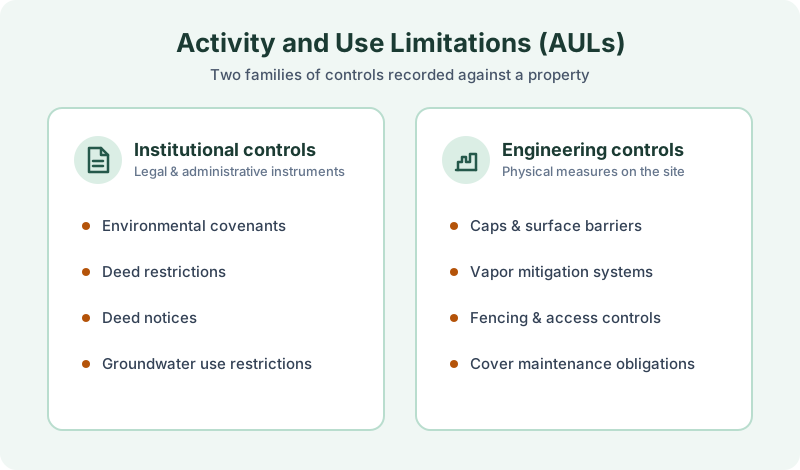
AULs come in two broad families. Institutional controls are legal and administrative instruments: environmental covenants, deed restrictions, and deed notices. Engineering controls are physical measures: caps and barriers, vapor mitigation systems, and fencing.
Common examples
In practice, AULs recorded against commercial properties look like this:
- An environmental covenant prohibiting residential use, schools, or daycare facilities on a former industrial parcel
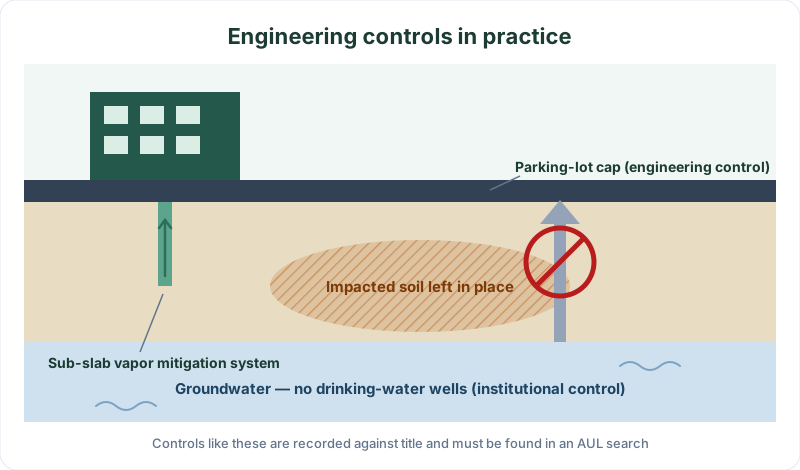
- A groundwater use restriction barring the installation of drinking-water wells
- A deed notice requiring a soil management plan before any excavation
- A requirement to maintain a parking-lot cap or building slab over impacted soil
- An obligation to operate and maintain a sub-slab vapor mitigation system
Why AULs matter in a transaction
AULs run with the land, binding every future owner and not just the party that agreed to them. A buyer who acquires a property subject to an AUL inherits its obligations, and complying with existing land-use restrictions is one of the continuing obligations a landowner must meet to preserve CERCLA liability protections such as the bona fide prospective purchaser defense.
AULs can also make or break a redevelopment plan. A restriction that forbids residential use, basements, or groundwater wells may be a non-issue for one buyer and a deal-killer for another. Either way, you want to know about it before closing, not after.
Where AULs are recorded (and why they’re easy to miss)
Most institutional controls are recorded in county land records as covenants, restrictions, or notices attached to the deed chain. Some states also maintain registries or institutional-control databases, and in certain jurisdictions environmental instruments are filed in judicial records rather than land records.
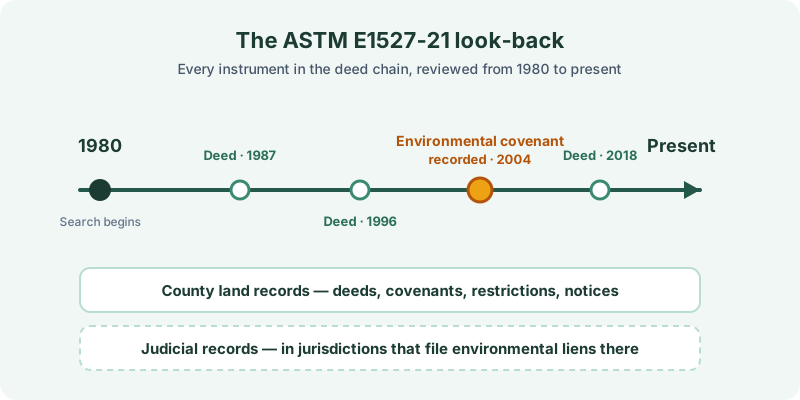
The catch: these documents are often indexed inconsistently, especially older ones, and they aren’t always labeled as “environmental” anything. A restriction buried in a 1980s deed can be invisible to a search that only looks at the current owner. Finding AULs reliably means abstracting the full chain of recorded documents. That is exactly why the ASTM standard requires a look-back.
What ASTM E1527-21 requires
The E1527-21 standard requires that land title records be reviewed for environmental liens and AULs recorded between 1980 and the present, and that judicial records be reviewed for the same period in jurisdictions that file environmental instruments there. A title search limited to the current owner no longer satisfies the standard. For the full picture of what changed in 2021, see our comprehensive ASTM E1527-21 guide.
How a 1980 Environmental Lien & AUL search finds them
Our 1980 Environmental Lien & AUL report is built for this requirement from the ground up. Certified title abstractors reconstruct the deed chain back to 1980, review every recorded instrument in that chain (including judicial records where applicable), and summarize any environmental liens, encumbrances, and Activity and Use Limitations found, along with the legal description, current owner, and current deed copies.
Reports are delivered by email in 3–5 business days and cost $425. You can order a search online in a few minutes, or call 877-848-5337 if you have a complex parcel or need bulk pricing for a portfolio.
Get an E1527-21 compliant lien & AUL report
Our 1980 Environmental Lien & AUL reports are researched by certified title abstractors, cover judicial records, and are guaranteed accurate. Delivered in 3–5 business days.
or call 877-848-5337