Published
Glassmaking looks like an unusually clean process from the outside. Sand goes in one end and bottles come out the other, and the visible waste is broken glass. The contamination is in the additives that made the glass work, in the refractory brick that lined the furnaces, and above all in where the waste glass was put. This is a metals site, closer in character to a former foundry than to a solvent plant.
What a glass plant leaves
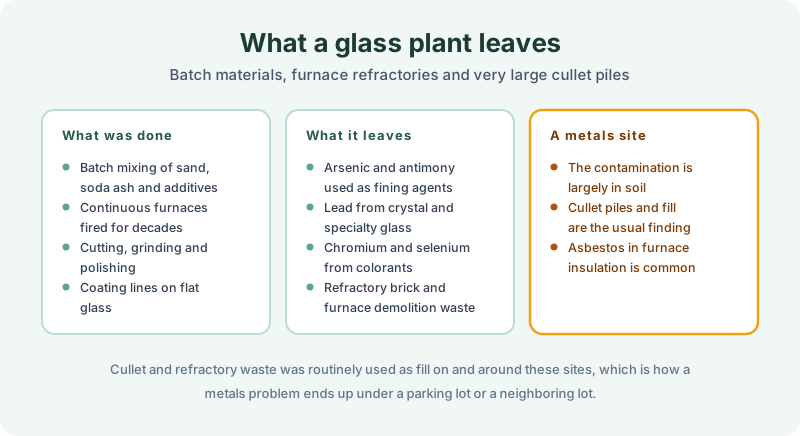
Batch mixing brought sand and soda ash together with a long list of additives. Furnaces ran continuously for years at a stretch, lined with refractory brick that had to be replaced periodically. Downstream came cutting, grinding and polishing, and on flat glass lines, coating operations.
The metals came from the additives. Arsenic and antimony were standard fining agents used to clear bubbles from the melt. Lead in crystal and specialty glass, in quantity. Chromium, selenium, cadmium and cobalt as colorants, depending on what the plant made and when. Alongside them sit refractory brick and furnace demolition waste, and asbestos insulation, which on a plant of any age is close to guaranteed.
The contamination is largely in soil rather than groundwater, which sounds better than it is, because the soil in question frequently moved.
Scale is worth keeping in mind. A container plant running several furnaces produced waste glass by the thousands of tons over its life, and nobody paid to haul that any further than they had to. The practical result is that the fill area is usually close by and is often not on the plant parcel at all, which makes it the part of the site most likely to be missed.
What reaches the land record
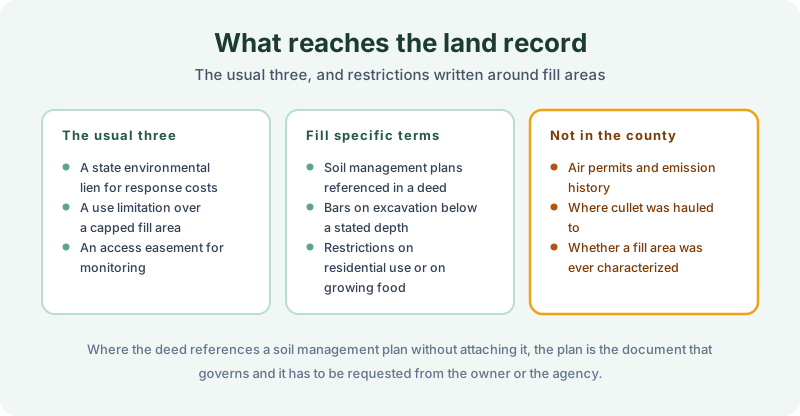
The usual three instruments. A state environmental lien, an activity and use limitation, and an access easement for monitoring.
What is characteristic here is the shape the restriction takes, because the problem is fill. Deeds referencing a soil management plan, which is the document that actually governs what can be dug and where, and which is frequently referenced without being attached. Bars on excavation below a stated depth. Restrictions on residential use or on growing food, which follow from metals in near surface soil.
Where a deed references a soil management plan and does not attach it, the plan has to be requested from the owner or the agency. The recorded instrument tells you a constraint exists and the plan tells you what it is.
Deed notices describing former operations appear on some closed sites and are worth looking for by name, because they are captioned inconsistently and an index search for the word restriction will not necessarily surface one.
What stays with the agencies is the air permit history, the record of where cullet was hauled to, and whether a fill area has ever been characterized at all.
Scoping the records work
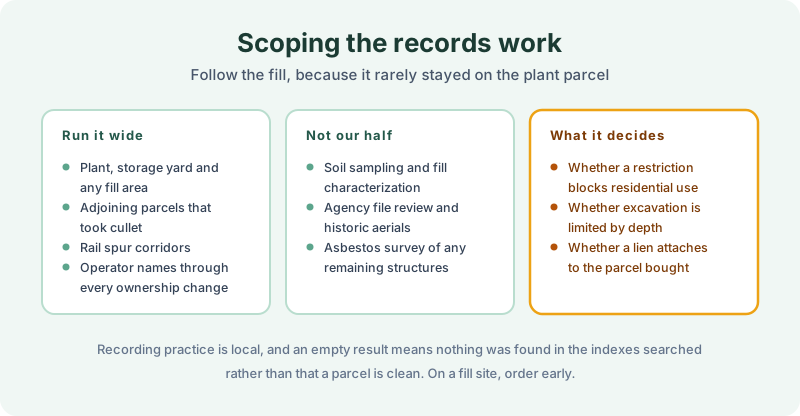
Follow the fill. Cullet and refractory waste was routinely used as structural fill on and around these sites, under parking, under roads, and on neighboring parcels that had a low spot somebody wanted raised. So the search covers the plant, the storage yard, any fill area, adjoining parcels that took material, and rail spur corridors, which is where a great deal of it went.
Run operator names through every ownership change, and take land title and judicial records from 1980 forward with the instruments attached in full. Where the plant was split and sold in pieces, which is common on large sites, every resulting parcel needs its own read rather than an assumption that the restriction sits on whichever one carries the buildings.
Run it alongside the environmental professional. Soil sampling, fill characterization, agency file review, historic aerials and an asbestos survey of anything still standing are theirs. The buyer’s own user responsibilities stay with the buyer.
Asbestos deserves a line of its own on these sites. Furnace and annealing lehr insulation was heavily asbestos bearing, and where a structure is still standing the survey is a demolition cost rather than a contamination question. It is the consultant’s work and it belongs in the same file.
Order early. A restriction barring residential use over a fill area ends a housing scheme by itself, and recording practice is local, so an empty result means nothing was found in the indexes searched rather than that a parcel is clean.
The 1980 Environmental Lien & AUL report is where that records work gets done. Certified title abstractors review land title and judicial records from 1980 to the present and document every environmental lien, encumbrance, and AUL found, with the recorded instruments attached. It’s $425, delivered by email in 3–5 business days. Order online, or read how an environmental lien and AUL search is performed first.
Get an E1527-21 compliant lien & AUL report
Our 1980 Environmental Lien & AUL reports are researched by certified title abstractors, cover judicial records, and are guaranteed accurate. Delivered in 3–5 business days.
or call 877-848-5337