
Published
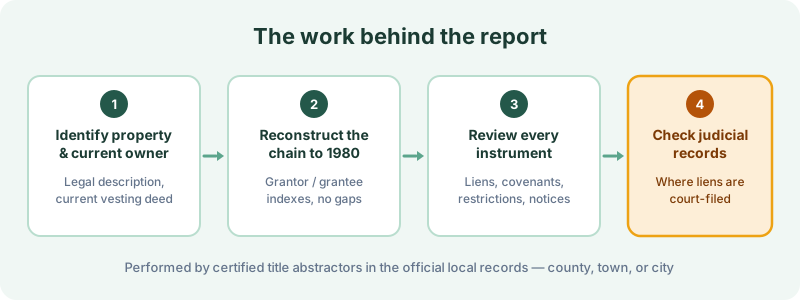
When you order an environmental lien and AUL search, what happens next isn’t a database query. It’s records research, performed by certified title abstractors, in the official records of the county, state, or city repository where the property sits, with state and federal sources checked as needed. Here’s the work behind the report, and why each step exists.
Step one: pin down the property and its current owner
Everything starts with identifying exactly what parcel is being searched: the legal description, not just the street address. The abstractor locates the current vesting deed and confirms who holds title today. This matters because recorded instruments are indexed against the parcel or its owners: search the wrong legal description and the rest of the work is aimed at the wrong target.
Step two: reconstruct the deed chain back to 1980
Working backward through the recording office’s grantor and grantee indexes, the abstractor traces each transfer of ownership (who conveyed to whom, in what year, at what book and page) until the chain reaches 1980. It’s the same discipline behind a chain of title report, and it has to be complete: a gap in the chain is a stretch of years in which a recorded lien could hide.
Step three: review every instrument recorded in the chain
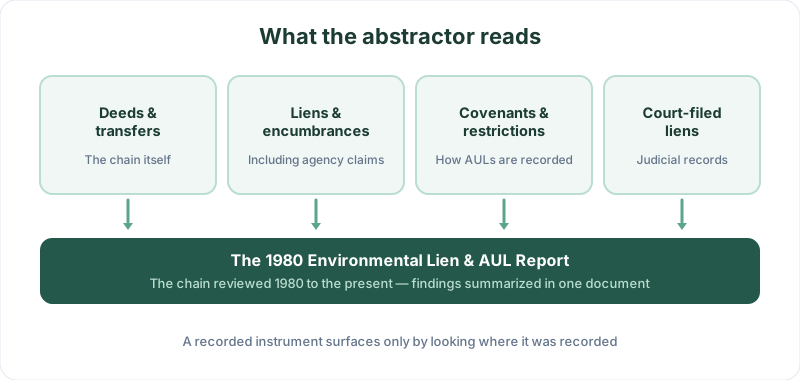
The deed chain is the skeleton; the instruments recorded against the property and its owners are where findings live. The abstractor reviews what the record holds for the search period: deeds, liens and encumbrances, covenants, and the deed restrictions and notices that implement Activity and Use Limitations. An environmental lien recorded against a 1980s owner surfaces here, even though it predates the current owner by decades.
Step four: check the judicial records where liens live in court files
In some jurisdictions, environmental liens are filed in judicial records with the clerk of the court, instead of or in addition to the land records. Court filing systems are indexed by case and party rather than by parcel, which is why this step takes local knowledge; we maintain state-specific local and judicial records resources for exactly this reason. ASTM E1527-21 expects these records to be reviewed for the same 1980-to-present period.
What arrives in your inbox
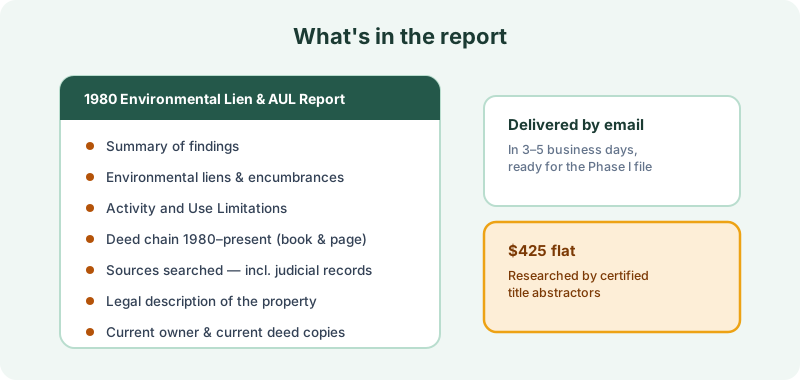
The finished report includes the deed chain from 1980 forward (book, page, date, grantor, and grantee for every transfer) along with a list of the sources searched (including whether judicial records were reviewed), any environmental liens, encumbrances, and AULs found, the property’s legal description, and current owner identification with copies of the current deeds. You can see the format for yourself in our sample report. Delivery is by email in 3–5 business days, and the report is $425.
Why it’s abstractor work, not a database pull
There is no single national index of land records. Each recording jurisdiction keeps its own, whether that’s a county, a town clerk in New England, or an independent city, and each comes with its own indexing quirks. A recorded instrument surfaces by looking where it was recorded. That’s why the search is performed by certified title abstractors rather than assembled from database matches. It’s how we cover the ASTM E1527-21 lien and AUL search scope in the record itself.
Ready when you are: order online in a few minutes, browse the FAQ, or, if you’re wondering what happens when a search turns something up, we’ve covered that too.
Get an E1527-21 compliant lien & AUL report
Our 1980 Environmental Lien & AUL reports are researched by certified title abstractors, cover judicial records, and are guaranteed accurate. Delivered in 3–5 business days.
or call 877-848-5337