
Published
A Phase I Environmental Site Assessment is a snapshot, and snapshots age. Both the EPA’s All Appropriate Inquiries rule (40 CFR Part 312) and ASTM E1527-21 give that snapshot a defined lifespan. If your closing date slips past it, the report and the CERCLA liability protections that depend on it can go stale together. Here’s how the viability window actually works, and where the environmental lien search fits in it.
The two clocks: 180 days and one year
A Phase I ESA is presumed viable when its key components were completed within 180 days before you acquire the property, the “six-month shelf life” that dates to the EPA’s 2005 All Appropriate Inquiries rule and carries through ASTM E1527-21. Between 180 days and one year, the assessment can still support All Appropriate Inquiries, but only if five specific components are brought current. Past one year, the assessment can no longer be updated into compliance: a new Phase I is required, though the standard’s prior-assessment provisions do let properly documented research from the old report inform the new one.
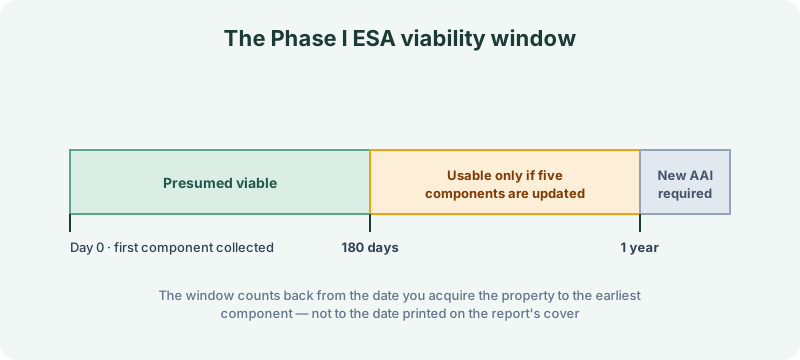
E1527-21 also settled a long-running ambiguity about when the clock starts. The window counts back from the date you acquire the property to the earliest of the key components (the first piece of information collected), not to the date printed on the report’s cover. A Phase I “dated” in March can be built on a lien search performed in January, and it’s the January date that governs.
The five components that must be updated
Between 180 days and one year, the AAI rule (40 CFR 312.20) requires these five components to be updated:
- Interviews with past and present owners, operators, and occupants
- Searches for recorded environmental cleanup liens
- Reviews of federal, tribal, state, and local government records
- Visual inspections of the property and adjoining properties
- The environmental professional’s declaration
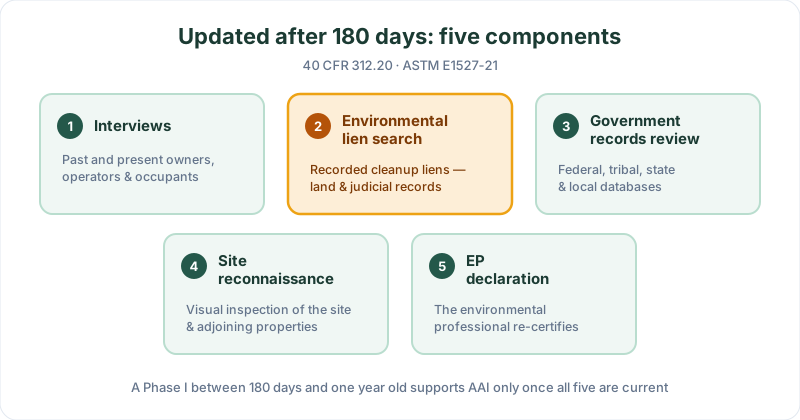
Note what’s on that list: the environmental lien search must be refreshed even if nothing about the deal has changed. The regulators’ logic is simple: these are the components most likely to be different six months later.
Why the lien search goes stale fastest
An environmental lien can be recorded on any business day by the agency that holds the claim; the current owner doesn’t initiate it and may not even know. An Activity and Use Limitation usually enters the record with the owner’s participation as a cleanup wraps up, which means a seller can record one mid-transaction. Either way, a search is only as current as the day it was run.
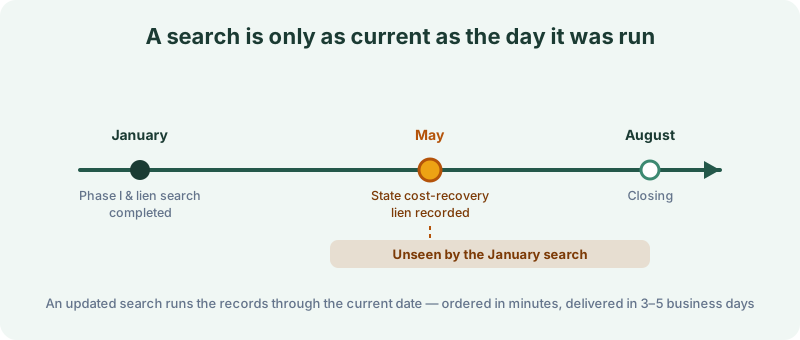
Picture a Phase I completed in January for a deal meant to close in April. The closing slips to August. In May, a state agency records a cost-recovery lien against the property. The January search was accurate the day it was run and is blind to everything after it. Only an updated search, run through the current date, surfaces the May lien before it becomes the buyer’s problem.
Scheduling the search around your closing
The practical takeaways:
- Count from the earliest component, not the report date. Ask when the lien search and records reviews were actually performed.
- If closing lands between 180 days and one year, order the updates (the lien search among them) rather than assuming the report carries.
- If closing slips past one year, budget for a full new Phase I.
Our 1980 Environmental Lien & AUL report is researched by certified title abstractors and delivered by email in 3–5 business days for $425, quick enough to order or refresh once a real closing date is on the calendar. You can order online in a few minutes, and the lien search is one of the user responsibilities the standard assigns to you rather than to your environmental professional, a topic we cover in its own post. Questions? Start with our FAQ.
Get an E1527-21 compliant lien & AUL report
Our 1980 Environmental Lien & AUL reports are researched by certified title abstractors, cover judicial records, and are guaranteed accurate. Delivered in 3–5 business days.
or call 877-848-5337